
Introduction
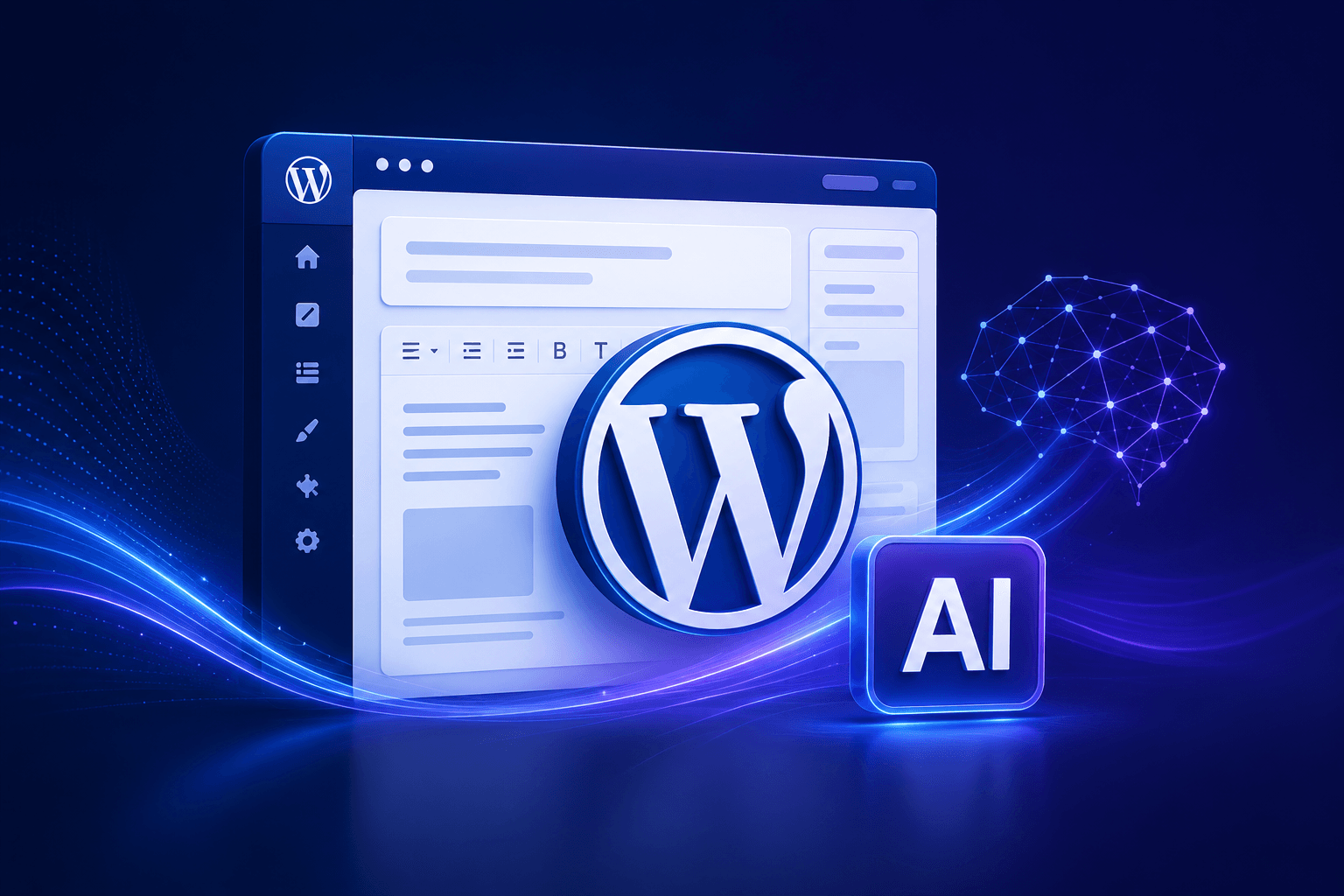
WordPress is moving more clearly toward integrating artificial intelligence into the website management experience. This is no longer only about using an external plugin to generate text; it is becoming a broader direction that touches content creation, page editing, and the developer experience across the WordPress ecosystem.
The main idea behind this shift is that AI is becoming closer to the daily workflow of WordPress users, whether through tools already available in WordPress.com or through experimental projects and development packages that prepare the platform for deeper AI integration.
What is new in WordPress and AI?
The most important change is that WordPress is no longer treating AI as a small side feature only. An official WordPress AI team has been introduced to explore and develop the right ways to bring artificial intelligence into the project in an open and scalable way.
This direction means that future WordPress experiences may include smarter tools inside the dashboard and block editor, such as text suggestions, page structure improvements, easier content creation, better support for developers, and more personalized user experiences depending on the type of website and its needs.
The AI Assistant in WordPress.com
In practice, AI already appears in WordPress.com through the AI Assistant. This tool helps website owners write content, improve wording, generate new ideas, and simplify the process of creating posts and pages.
Having this tool inside the WordPress environment can save bloggers and business owners a lot of time, especially when writing first drafts, improving headings, or rewriting paragraphs in a clearer and more audience-friendly style.
WordPress AI experiments for developers
For developers, AI-related packages and projects are starting to appear inside the WordPress ecosystem. These include tools that help connect AI providers with WordPress experiences in a more organized way.
Much of this work is still experimental, but it is important because it opens the door to smarter plugins, themes, and editing experiences in the future. In other words, WordPress is preparing the foundation that allows developers to build AI-powered solutions without relying only on random or isolated integrations.
Does this mean WordPress now depends entirely on AI?
No. WordPress has not become a platform that runs completely on artificial intelligence. Managing a website, controlling content, designing pages, and configuring settings still depend on the user or the team behind the website. AI works as an assistant, not as a full replacement for the website owner, editor, or developer.
It is also important to remember that AI-generated content still needs human review, especially for specialized articles, commercial content, or any content that depends on accurate information. AI can speed up the workflow, but it does not replace fact-checking, editorial judgment, brand voice, or human experience.
Why does this update matter for website owners?
For website owners, AI inside WordPress means faster content production, more ideas, and an easier editing experience. A site owner can start with a first draft, then review it and add personal expertise instead of starting from a blank page.
AI can also help improve headlines, summarize pages, suggest article structures, or turn scattered ideas into organized content. These benefits are especially useful for news websites, blogs, online stores, and service pages.
Why does this update matter for developers?
Developers may be among the biggest long-term beneficiaries. A more official path for AI experiments in WordPress creates more opportunities to build plugins, themes, and editing tools that rely on AI in a more stable way.
Instead of creating separate integrations for every AI provider, the WordPress ecosystem may gradually move toward shared tools, standards, or packages that make it easier to integrate AI into products built on top of WordPress.
Important points before using AI in WordPress
Although AI can save time and effort, it should be used carefully. Content should be reviewed before publishing, facts should be checked, copied or generic wording should be avoided, and sensitive data should not be entered into tools that depend on external providers unless privacy is fully understood.
It is also better not to rely entirely on automatically generated text without editing. Strong content still needs a clear point of view, real experience, and a tone that fits the target audience. These are areas where the human role remains essential.
Conclusion
WordPress’s new direction toward artificial intelligence is an important step in the future of website management. The idea is no longer just about a plugin that generates text; it is the beginning of a broader integration between WordPress and AI tools for writing, editing, development, and improving the user experience.
Although some of these features are still experimental or under development, the message is clear: WordPress is preparing for an era where AI tools become a natural part of building and managing websites, while the final decision remains in the hands of the user.